All work Product Design · Enterprise UX · Ford

Redesigning vehicle-data access from weeks to days

I led the end-to-end design of a self-serve platform that lets Ford engineers monitor vehicle-feature performance themselves — turning a slow, manual, expert-dependent process into a guided experience that delivers insights in days instead of weeks.

Role

Lead Product Designer — research → strategy → high-fidelity UI

Team

Product owners, PMs, data & platform engineers

Timeline

2024–2025

Platform

Connected-vehicle data enablement (internal Ford)

Weeks → Days
to detect feature issues
126
vehicle features monitored
~12%
lower data-collection cost
across billions of responses
Hours → Min
to create a request
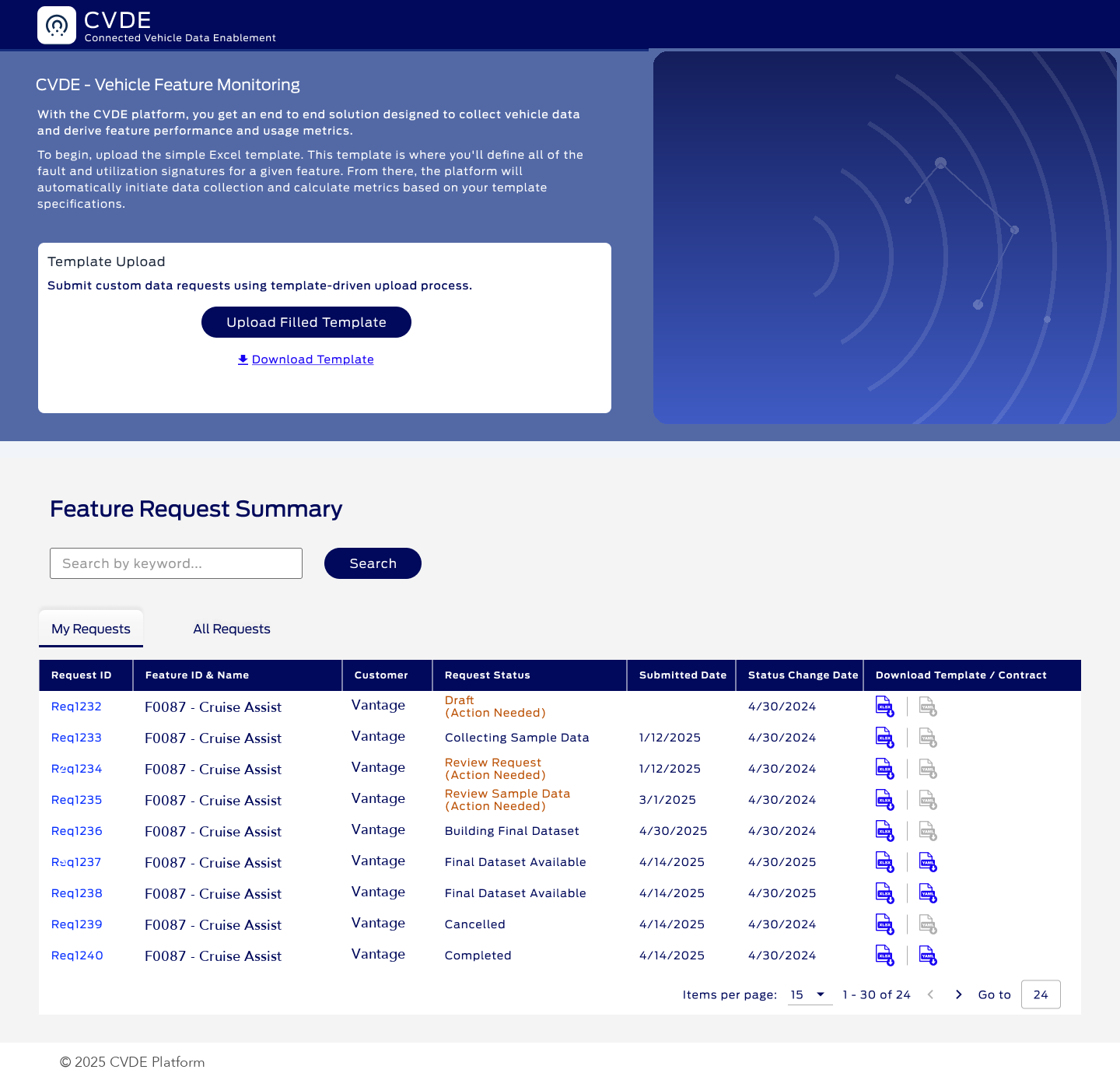
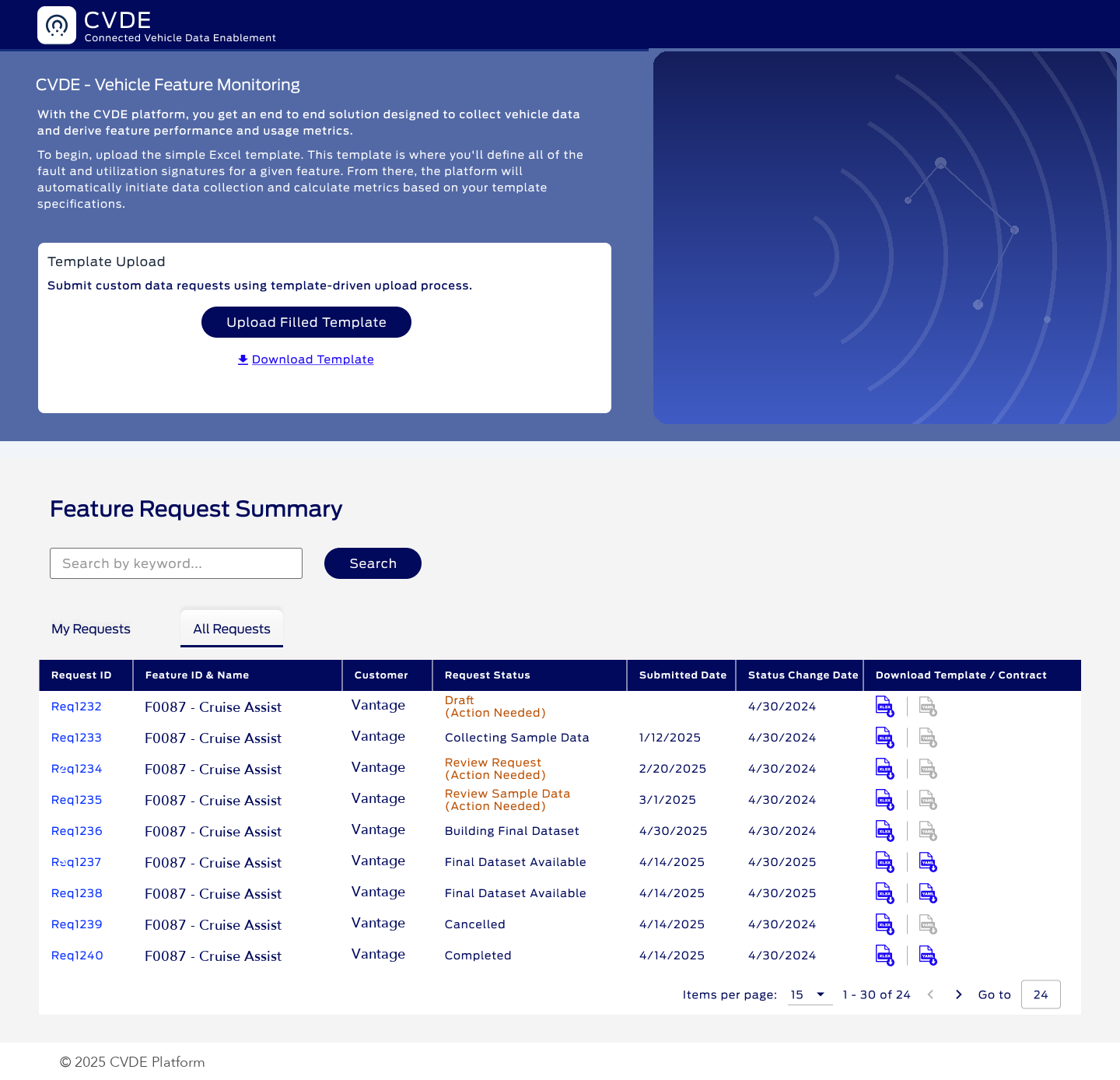
CVDE all-requests dashboard showing status at a glance
The all-requests dashboard — status at a glance across every monitoring request. (De-identified.)
The challenge

Getting real-world data was a relay of manual handoffs.

Issues that should have surfaced in days took weeks to detect. The mandate: make it self-serve — so any engineer could get trustworthy insights without becoming a data specialist.

Ford engineers responsible for vehicle features needed real-world data to know whether a feature was performing as designed. Getting that data was painful — a relay of manual handoffs and specialist requests, where engineers had to know exactly what to ask for and wait through multiple approval and collection steps.

A manual relay

Every data request moved through handoffs and specialists — no direct, self-serve path for the engineer who needed it.

Weeks, not days

Problems that should have surfaced quickly took weeks to detect, delaying every feature decision downstream.

Expertise was the bottleneck

Users had to know exactly what to ask for and how to translate it into a data pipeline.

Scarce capacity

Every request consumed limited vehicle-data collection capacity — waste was expensive at Ford's scale.

No shared visibility

There was no single place to see request status or results, so trust and follow-through suffered.

Must feel self-serve

Any engineer had to define, submit, and receive insights — without becoming a data specialist first.

My role & approach

A strategic pivot to a template-driven model.

We began building a traditional UI where engineers configured everything on-screen. Testing and a management steer pushed us somewhere better.

The mandate

  • Make vehicle-data access self-serve
  • Reduce reliance on specialists
  • Deliver trustworthy insights faster
  • Fit how engineers already work

What I owned, end to end

  • Discovery research & interviews
  • Information architecture & taxonomy
  • Interaction + high-fidelity UI
  • The template-model product decision
  • States, error & feedback model
  • Design QA through agile delivery

I ran interviews and working sessions with feature engineers and system owners to understand how they actually worked — not how the process was documented. Three insights shaped everything:

  • Certainty over configuration. Their real fear was submitting something wrong and not finding out until weeks later.
  • Expertise was the bottleneck, not the UI. The system had to carry the complexity so the user didn't have to.
  • Trust required visibility. People needed to see validation, status, and a sample of results before committing to full-scale collection.
The decision I'm proudest of

Instead of forcing users through complex on-screen configuration, they fill a standardized template that defines what they need. The UI's job shifted from "capture every detail" to "show status, catch problems early, and build confidence." Hide the backend complexity; surface trust.

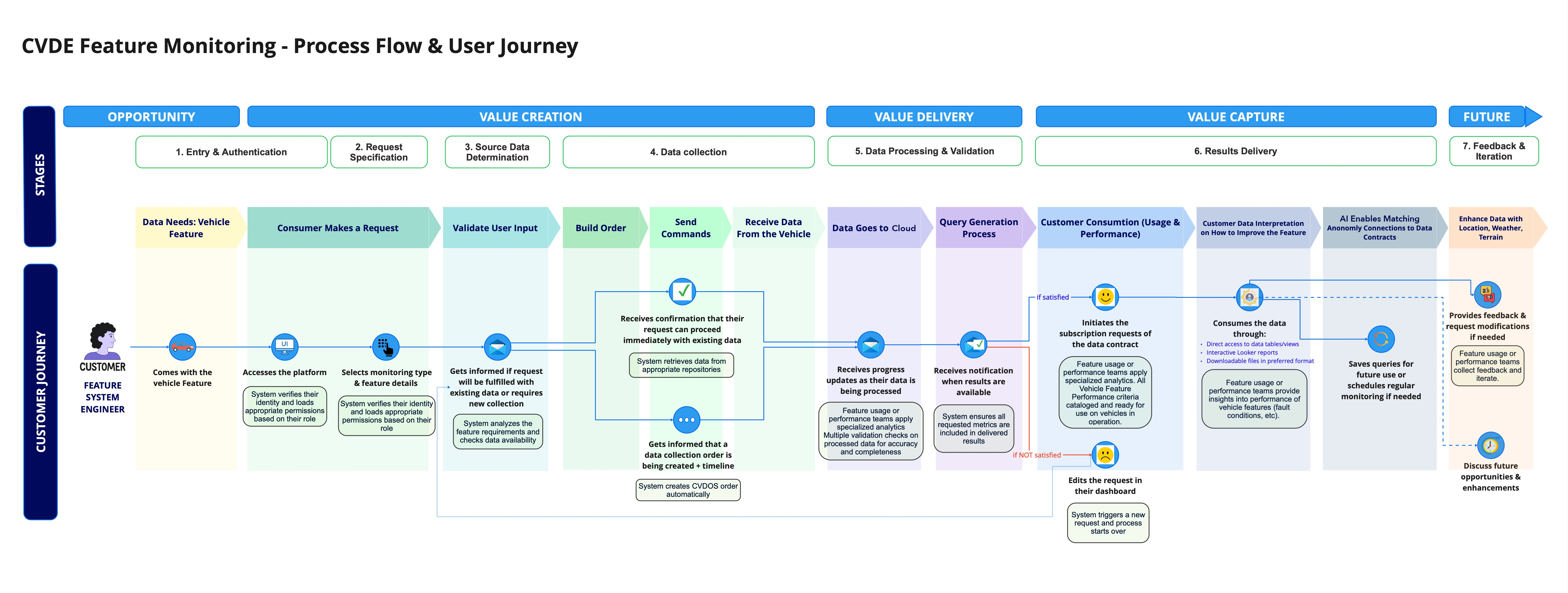
End-to-end journey and process flow map
End-to-end journey + process flow — my shared source of truth across product and engineering.
The solution

The system carries the complexity; the user carries the intent.

A validated template flows automatically through to results — so the interface can focus on confidence, not configuration.

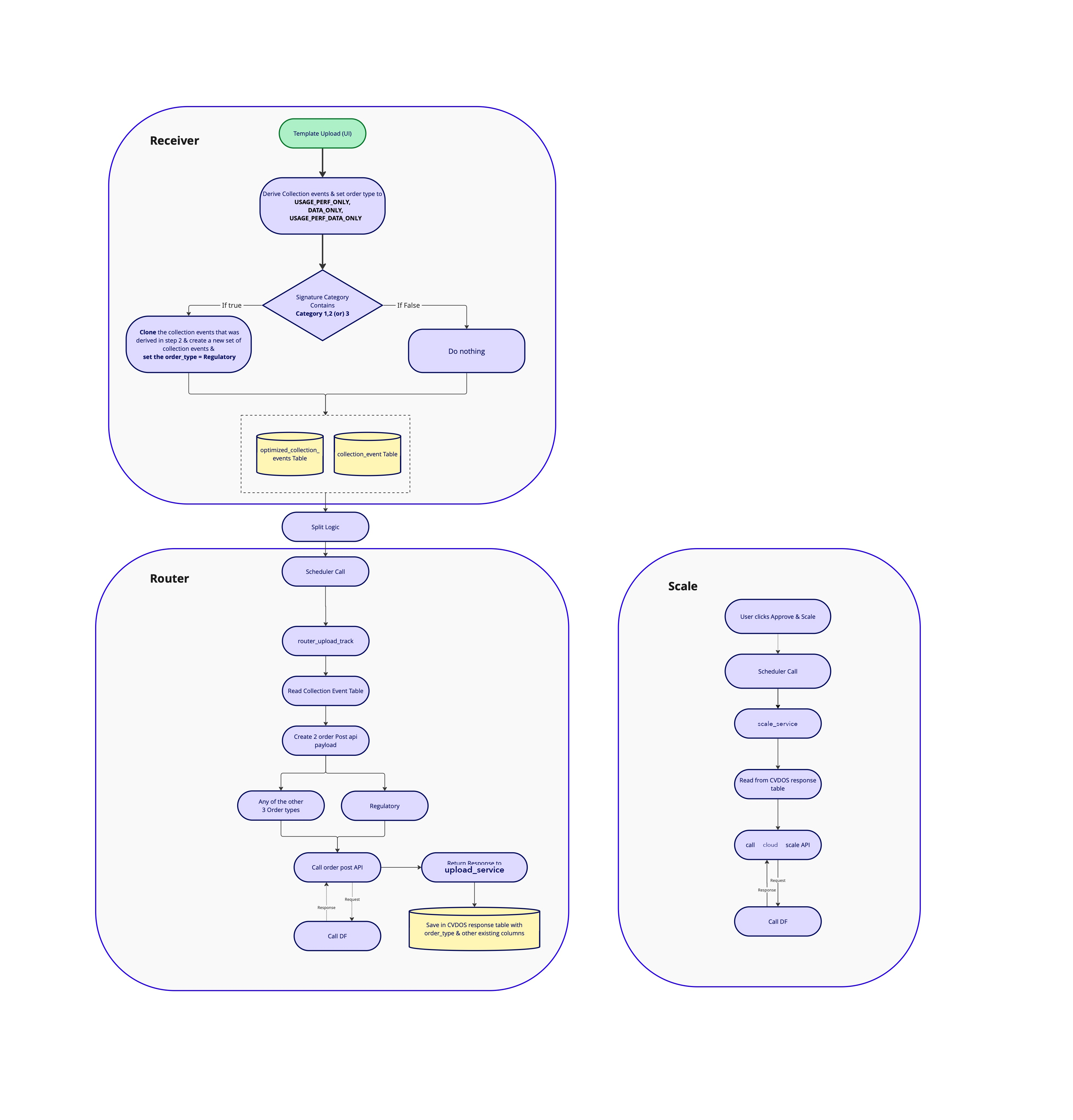
Technical blueprint of the template-driven data pipeline
Technical blueprint (v2.0) — how a validated template flows automatically through to results. (De-identified.)
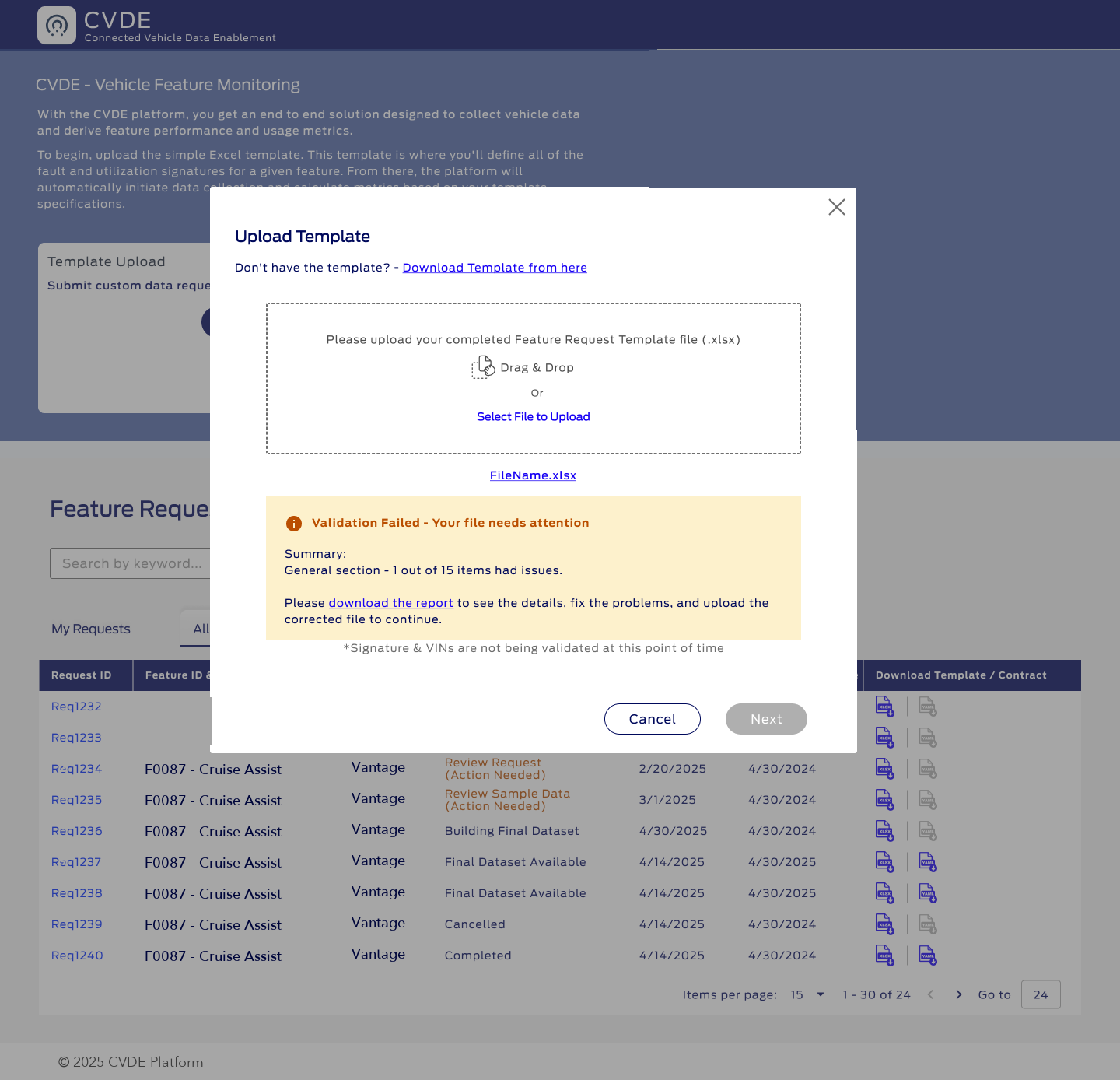
Surface 01

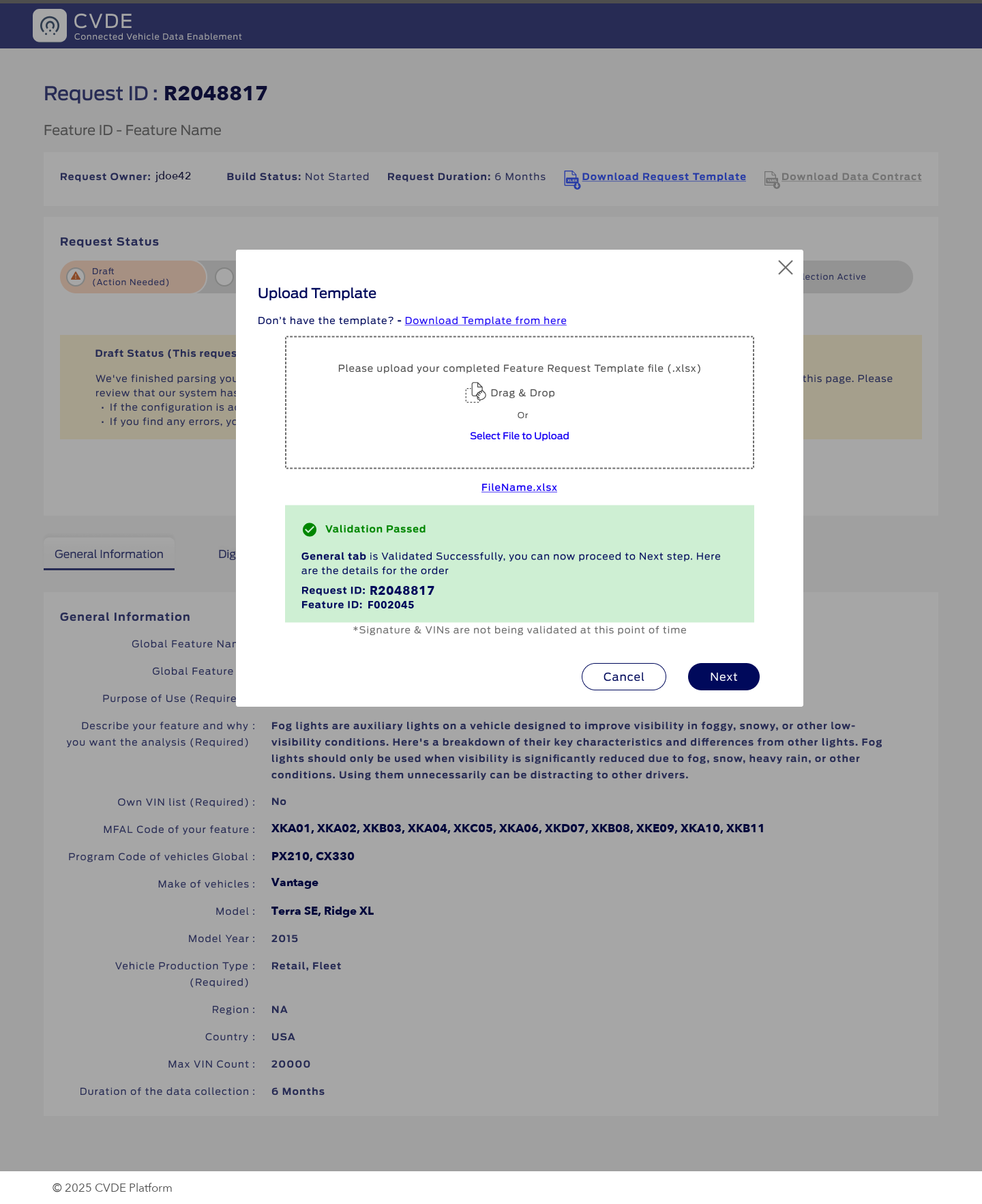
Template upload + validation feedback

Problem

A wrong submission wouldn't surface until weeks of collection had already run — the users' deepest fear.

Decision

Led the error-handling and feedback design so validation is clear and actionable — users fix issues before anything runs.

Tradeoff

Stricter up-front validation over a frictionless upload — resolved with plain-language, fix-it-here errors.

Outcome

Mistakes caught in seconds instead of weeks — the foundation of trust in the platform.
Surface 02

Feature detail — the working surface

Problem

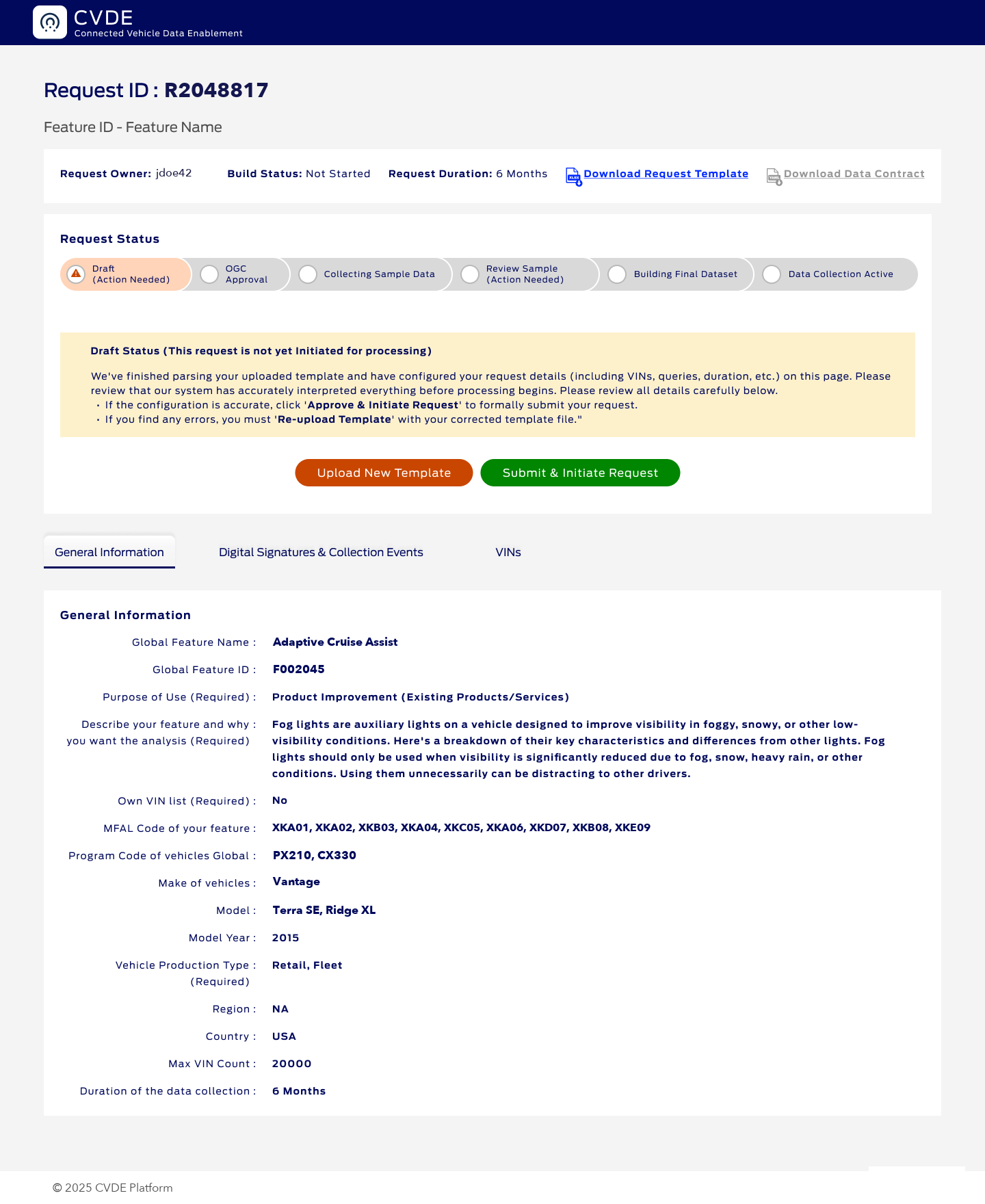
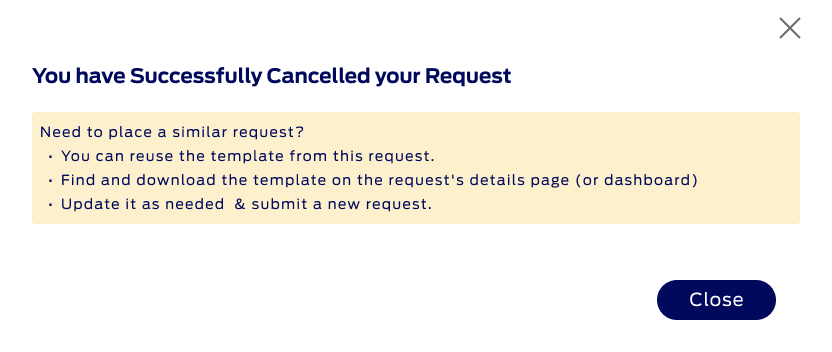
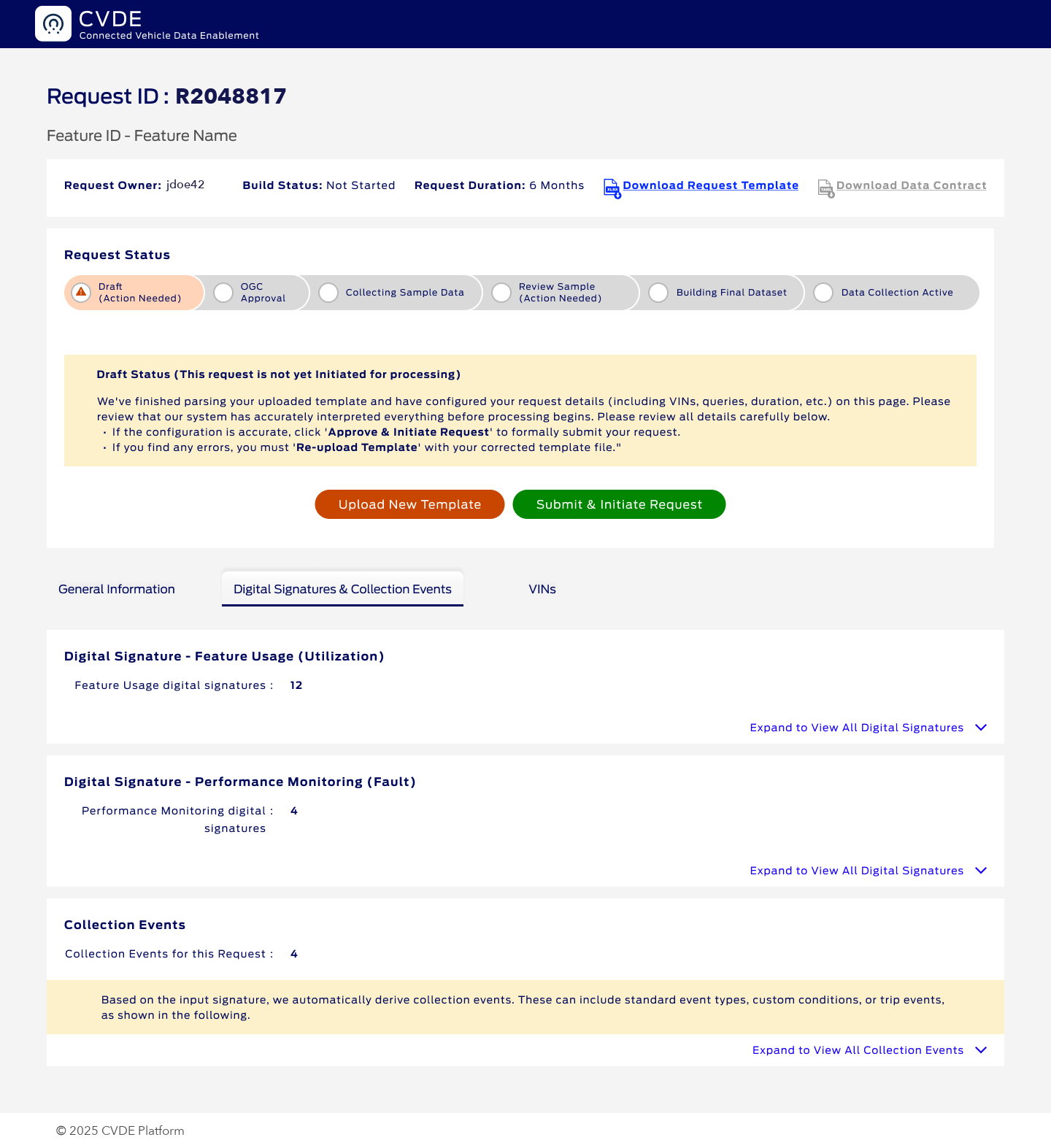
A monitoring request moves through many states — pending approval, correction needed, cancelled — that a single view had to hold.

Decision

Designed a multi-tab feature detail as the day-to-day working surface, with a clear model for every state.

Tradeoff

More structure than a simple list, in exchange for a surface that scales to complex, long-running requests.

Outcome

Engineers manage everything in one place — no chasing status across teams.

Surface 03

Sample preview → scale approval

Problem

Committing scarce capacity to full-scale collection is a leap of faith if you can't see results first.

Decision

Built a two-step "see it, then commit" moment — preview a sample of results before approving full collection.

Tradeoff

An extra confirmation step, traded for confidence and far less wasted collection capacity.

Outcome

The trust moment — users commit knowing exactly what they'll get.

Outcome & impact

Insights in days, not weeks.

Weeks → Days
to detect and resolve feature issues
126
vehicle features monitored through the platform
~12%
reduction in data-collection cost across billions of responses
Hours → Min
to create a request
accelerated by the AI template assistant
  • Request creation dropped from hours to minutes — accelerated further by the AI template assistant I later built (see the AI case study).
  • Established the self-serve foundation the platform continues to scale on.
  • Turned an expert-dependent relay into a guided experience engineers run themselves.
Reflection

The win wasn't a screen — it was a decision.

Letting a template carry the complexity so engineers could stay in their own language is the move I'd make again.

Decisions beat deliverables.

The breakthrough wasn't a better form — it was shifting the UI's job from capturing detail to building confidence.

Trust is built from visibility.

Validation, status, and a sample before committing were what turned a skeptical process into a self-serve one.

The instinct that led to AI.

If I continued, I'd push on proactive guidance — helping users define the right request, not just a valid one. That instinct is exactly what led me to build the AI assistant.